An independent gemology reference for gemstone identification, treatments, inclusions, minerals, and field guides for students, collectors, and gem professionals.
A coral skeleton records growth, but living tissue supplies the energy that makes growth possible. Corals are animals, yet many reef corals obtain energy through a partnership with photosynthetic microorganisms. They can also feed on external resources. Understanding these energy pathways helps explain why changes in light, food and water conditions can affect coral growth and survival. [1] Two important energy pathways In photosymbiotic corals, algal partners capture light energy and share products of photosynthesis with the host. The animal also obtains food through heterotrophy, including the capture or uptake of organic resources. Their relative contributions differ among species and environments. [1] Symbiosis illustration, Figure 1 from the bleaching overview; used here to explain the nutritional partnership. Image: Norma OlguÃn-López and colleagues (2017) , IntechOpen source , CC BY 3.0 . Reproduced without scientific alteration. What does trophic plasticity mean? Trophic plasti...
Get link
Facebook
X
Pinterest
Email
Other Apps
Petroleum Quartz
Get link
Facebook
X
Pinterest
Email
Other Apps
-
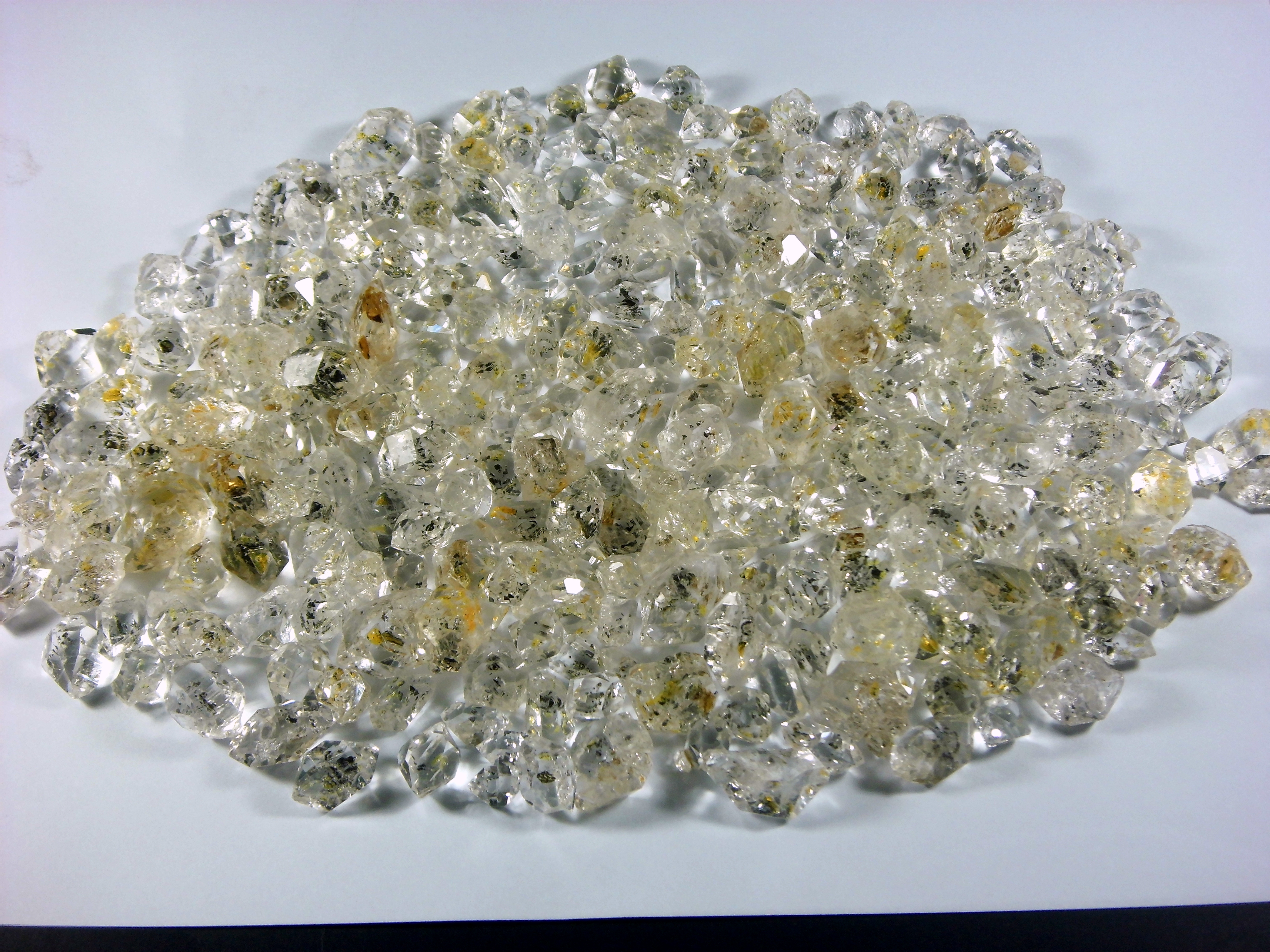
Petroleum Quartz (Quartz with Petroleum, Methane, Bitumen, and Water)
Being a particular kind of enhydro , doubly terminated quartz crystals containing negative crystals filled with petroleum, methane, bitumen, and water, are rare, though material of very good quality appears on gem and mineral fairs on a regular basis. Under ultra-violet radiation the petroleum inclusions present in the material reveal a strong fluorescent reaction.
This most striking material originates from the Zhob District in Balochistan Province, Pakistan, although some time ago one dealer had material on offer unearthed in the Jihouke District, Leshan Prefecture, Sichuan Province, China. However, these samples contained quite some bituminous matter, but far less petroleum and resemble herkimers with anthraxolite from the Adirondack Mountains in New York.
It might be interesting to note that petroleum inclusions similar to those in Pakistani quartz have also been found in quartz crystals originating from Bahia, Brazil (Gübelin & Koivula, 2005).
💎 Gemology Quiz 1. What does gemology study? The study of rocks only The study of gemstones and their properties The study of fossils 2. Who is a gemologist? A person who mines gemstones A person who designs jewelry A person who identifies gemstones using instruments 3. Which of the following is NOT a characteristic of a mineral? Naturally occurring Organic in nature Has a defined chemical composition 4. What makes a gemstone valuable? Only its size Beauty, rarity, and durability Color only 5. Which of the following is an organic gem? Sapphire Pearl Emerald 6. The Mohs scale measures what property? Toughness Hardness Transparency Submit Quiz Further reading introduction to gemology Gemology MCQs Part-1
Gemology MCQs Gemology Multiple-Choice Questions 21. Separating natural pink sapphire from synthetic pink sapphire commonly relies upon a microscopic study. True False 22. In a round brilliant cut, the total number of facets is: 57 59 60 None of the above 23. A spectroscope is used to detect the spectrum. True False 24. Refraction is the bending of light. True False ...
Gemstone MCQs Quiz Test Your Knowledge in Gemology Part 6 1. A 2-carat fine-quality ruby is worth more than 10 rubies of the same color and quality, which have a total weight of 4 carats . a) True b) False Correct Answer: a) True 2. One carat equals: a) 1 gram b) 1/10 of a gram c) 1/5 of a gram d) 1/2 of a gram Correct Answer: c) 1/5 of a gram 3. A ten-pointer is a stone that weighs: a) 10 carats b) 1/10 of a carat c) 10 facet junctions d) 10 grams Correct Answer: b) 1/10 of a carat 4. When comparing gem prices, you should compare their: a) Per-carat cost b) Overall size c) Density d) Facet count ...
Comments
Post a Comment
Post a Comment Please. we love hearing from you.